Please join us for a gathering to commemorate our friend, colleague and fellow countryman late Abdishakur Sheikh Ali Jowhar, this coming Sunday, 20th May 2012, at 17:30 at Oxford House, Derby shire, E2 6HG London
It is with great sadness that we received news about the passing of our great scholar, comrade, patriot and fellow countryman Dr Abdishakur Sheikh Ali Jawhar, might God bless his soul.
Marxuun Abdishakur Sheikh Ali Jowhar was an honest and committed independent thinker, healer and activist. As we are forced to contemplate a world without his direct counsel, assistance and kind words, we also take comfort knowing that he left us with many fond memories and gave a nation in search of guidance the kindest gift of all, his erudite writings. Read the rest of this entry »
Mogadishu. 2012. What could draw an individual living in the Somali Diaspora to
move permanently to a city so plagued by violence and instability? What is the reality
of life there beyond the headlines? Our documentary ‘Back to Somalia’ intends to
answer these questions and many others by following three individuals from the U.K,
Canada and Kenya as they settle in Mogadishu. We intend to make an inspiring film
that peels back the layers of myth and misunderstanding around life in Mogadishu and
shows the opportunities, challenges and practicalities of life in a city ruined by twenty
years of conflict. Read the rest of this entry »
Kayd Somali Arts and Culture is pleased to invite you to a presentation and discussion of the new book Getting Somalia Wrong? with author, Mary Harper, and discussants Idil Osman and Quman Akli.
Two decades of state collapse, conflict, mass displacement, natural and man-made disasters have earned Somalia the unenviable reputation of the world’s most failed state. Add to all this, the boom in piracy off the coast of Somalia and the rise of Islamic extremism on land and Somalia poses the greatest policy challenge for international decision-makers.
In Getting Somalia Wrong Mary Harper provides a concise account of how and why Somalia reached its present situation of state collapse, whilst managing to defy classical theories on the nation state by having functioning sectors.The author argues that, the Somalia we once knew, may no longer function in the conventional way, but in many respects the situation is far from being failed. The Somali people have responded to their harsh reality by creating alternative forms of business, justice, education and local politics.
Media Release Bringing the past to life through a unique traineeship
If you have a passion for history and relish the idea of bringing the past to life then a career in archives could be the ticket.
Tower Hamlets Local History Library & Archives is offering residents the chance to apply for a 12 month paid traineeship in heritage skills as part of a new scheme.
Opening Up Archives is an exciting training programme offered in partnership with The National Archives that’s been specifically designed for people who may never have thought about a career in Britain ’s archive sector.
Trainees will spend a year working on real-life projects whilst learning specialist skills that will equip them for a career in the heritage sector.
Since its inception five years ago, for the first time, I took part of Somali Week in London, the only annual Somali literary inclined gathering of its kind, where books with their writers, poetry where their poets, musicians with their music and comedy with their comedians have become a custom. In whisper–for we were trying not to disturb the gentle giants—I was informed that the theme chosen this year it was Translation.
In all, the people presented were cadre of talents who demonstrated the power and beauty bestowed on this fortunate, yet unfortunate language of ours (Somali). Fortunate because, unlike its people, Somali language refuses to lose its prowess, potency and beauty; unfortunate because its people have hardly been making use of the fortune that their language possesses. In eight nights this year however, both the attendees and participant were treated to a royal taste of their language’s entertainment, illumination and articulation values. Mouth agape, every minute that one took the podium, you would have thought she/he said it all. The delivery, the tempo and topics were all aligned with the theme, translation. Most important of all, each person augmented or rather complemented the one who had preceded him/her.
Waxaa dhowaan mar kale qabsoomay Festifaalka Toddobaadka Soomaalida [FTS] ee London ee sannadlaha ah oo gacansaar la lahaa Redsea Online. FTS 2011ka wuxuu festifaalladii taxanaha ahaa ee London, Boqortooyada Midowdey, ku qabsoomi jirey laga soo billaabo 2004tii, ka galay taariikh lama illaawaan ah. Wuxuu noqday kii ugu tayo iyo tamar wacnaa. Waxay dulucda FTS ee sannadku ahayd tarjumid. Waxaa la soo bandhigey buugag tarjuban oo tiro badan. FTS wuxuu sannadkan wada shaqeeyn la lahaa Xarunta Tarjumidda Maansooyinka iyo Agaasimaheeda Gabyaa Sarah Maguire. Waxay XTM tarjuntay maansooyin xul ah oo ay leeyihiin dhowr gabyaa oo ku casumnaa FTS. Read the rest of this entry »
PRESS RELEASE: Immediate release
29 September 2011
‘Mahdi’- the first Somali audio Book
Redsea-online cultural foundation is delighted to present you the first Somali audio book, Mahdi. the publication of ‘Mahdi’ in audio book form marks an important transformation in the distribution and reception of Somali Literature. Committed to raising awareness and expanding the availability of literary works to wider audiences, the Publishers have responded to the demand for books in audio format. This venture is part of a commitment to increase the impact and scope of Somali literature; the publishers in partnership with other organisations have also worked on translating Somali novels into other languages, and encouraging youngsters to read, write and present their work through the organisation of literary events and festivals. Read the rest of this entry »
Programme announced!
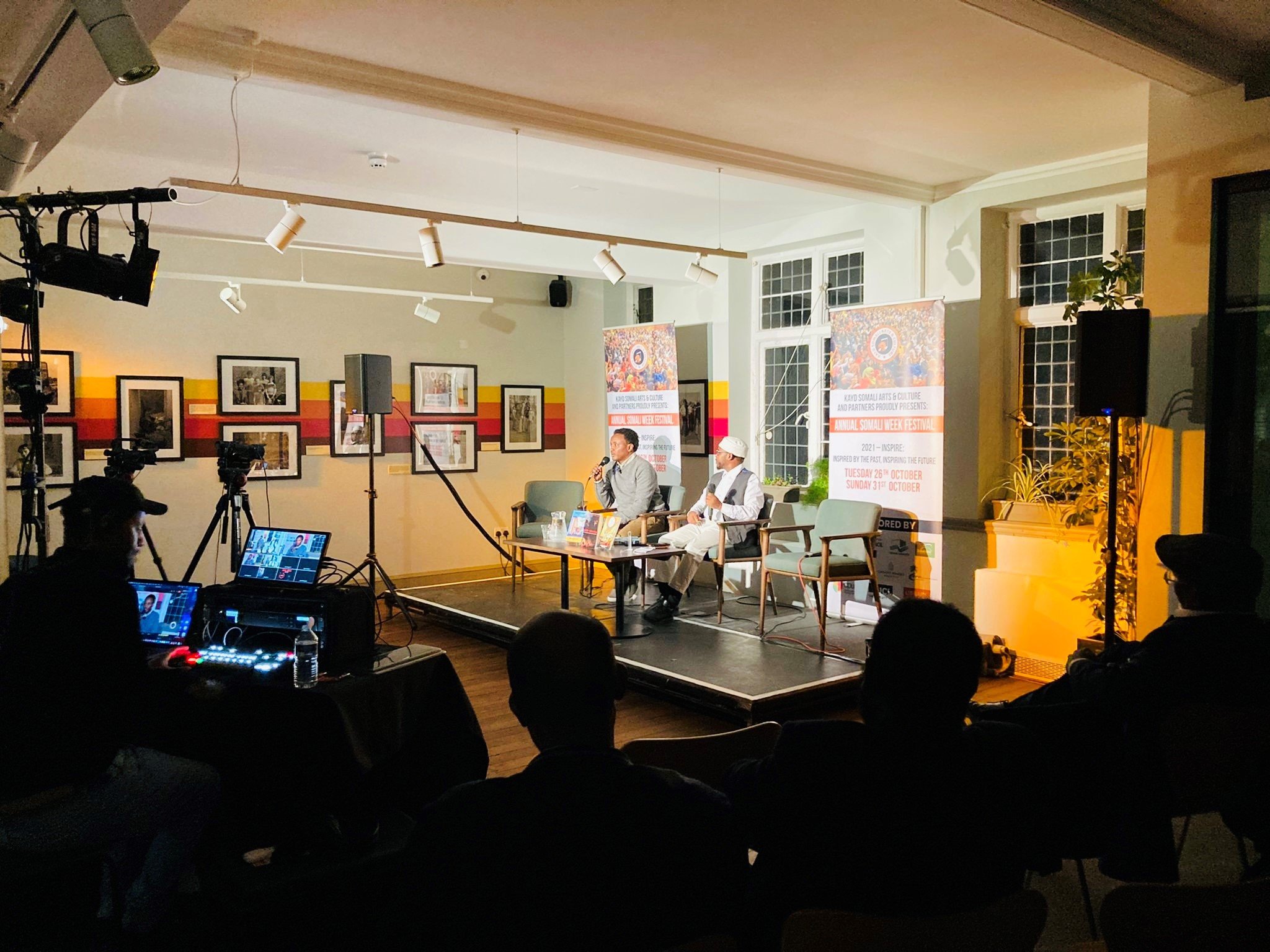
Kayd Somali Arts and Culture, in collaboration with Redsea-online Cultural Foundation and other partners, are proud to present the annual Somali Week Festival. The festival, an integral part of the Black History Month celebrations, will run from Saturday 22nd to Sunday 30th October 2011 in London . The festival offers the best of Somali arts and culture, both old and new, presenting a mix of events including poetry, literature, music and panel discussions.
Through different artistic expressions, Somali Week Festival has explored a variety of themes over the last few years and has become a widely recognized and anticipated annual event in the UK, particularly among the local Somali community.
Theme of the Year: Translation
This year, Somali Week Festival 2011 will introduce the topic of ‘Translation’. Translated works enable individuals to learn about a particular culture and its people. There is currently a severe shortage of Somali work translated into foreign languages and even fewer examples of world literature translated into Somali. It is this lack of cultural exchange that we wish to address by choosing translation as the theme of the year.
“My home the only quiet place around, the buzz of heatwave days felt faintly through galss and concrete. Beyond, everything mellow and molten.” From the author of prize-winning novel Black Mamba Boy, comes a story of hot summer afternoons, anticipation and tragedy.
Big thanks to Butcher Pete for the music, and to Shortfire Press!
Photo exhibition on Somaliland community in the City Hall of London
This exhibition is organised to celebrate and commemorate the reinstatement of Somaliland 20th independence anniversary and it will showcase the Somaliland communities across London at the different stages of their settlement in the capital. Despite their discreet visibility in the city, the Somaliland community is one of the oldest African communities in the capital and many members of the community have made a positive impact on the city’s vibrant cultural, economic and political life. As a former British protectorate, Somaliland continues to have strong links with Britain and this is reflected in the communities arrival in the UK originally as seamen, followed by flight from persecution and today as students and professionals. This community undoubtedly has over the last hundred years become part of the fabric of this city and the photographs will highlight these long standing hidden links.
We look forward to warmly receiving you. To register and for further information email somaliland2011@gmail.com